Night Ride
An integrated late night transportation pilot project
Edmonton has a vibrant late night economy and a safe, reliable way home needs to be the ending to every evening out.
Night Ride Final Report
Late Night Transit Service
Night Ride Update (PowerPoint Presentation)
Survey: How was the Ride?
News Release January 2012
Night Ride Poster
Night Ride Schedule and Map
Updated FAQ's (December 20, 2011)
Survey Summary (No Comments)
Survey Summary (Comments Included)
Night Ride Consultation Materials
Night Ride Pilot begins January 2012
- A bus/taxi integrated service from Whyte Ave - University of Alberta - Southgate Taxi Stand.
- Running from January- April 2012, Fridays & Saturdays from 1:30 am - 3:30 am.
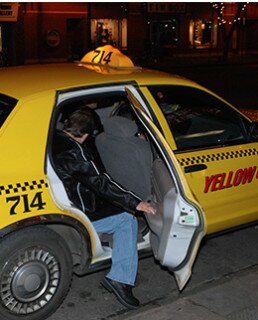
Every 12 minutes a regular ETS bus/driver will pick-up passengers at 5 stops westbound along Whyte Ave between 103 St and 109 St. The bus will go north to 87 Ave, west to the University of Alberta then south to Southgate Transit Center dropping off passengers as requested. At Southgate, a Taxi Stand with concierge will direct patrons to waiting taxis that have easy access to the Whitemud Freeway for quick trips to further destinations.
Ridership is anticipated to average a full bus seated about 55 people per bus or a total of 550 per night, with an optimistic total of 800 per night. The majority are anticipated to disembark in the University area north of 61 Ave, as this area houses over 6000 post secondary students.
The Rationale
Young adults have embraced the message "Don't Drink and Drive" and society needs to celebrate that decision by providing safe, readily available alternatives.
The most frequent comment received in late night entertainment surveys on Jasper Avenue in 2010 and on Whyte Avenue in 2006 were in regards to the need for late night/ 24-hour transportation.
In a 2011 survey of late night patrons on Whyte and Jasper Avenues, 53% of late night patrons said they would take a bus if available. 49% said they currently plan on taking a cab. Time to get a cab was identified as an issue.
Late night egress from entertainment zones has been identified across North America and Europe as a major factor in management and policing of the late night economy. Entertainment zones are defined as areas with a high density of late night pubs, clubs or other licensed premises.
Patrons arrive in these areas throughout the evening using a variety of methods including public transit that does not operate after 1:30 am and vehicles for hire (i.e. cabs, limos etc.) which are limited in number.
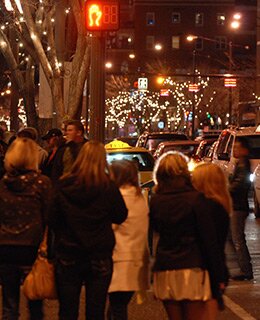
At closing time, all of these people are turned out of the licensed premises within approximately a half hour time span. This creates a competitive environment as people jockey for position to hail cabs, wait for rides, get food, find toilet facilities, get out of inclement weather, etc. This competitive situation escalates with density of crowd, time spent waiting and the reduction in adherence to social norms associated with alcohol consumption (even in moderate amounts).
Late night buses operate on weekends in Vancouver, the lower the mainland, Victoria, Guelph, Ottawa, Toronto and Montreal.
The model for this pilot is the very successful late night HOP buses in Boulder, Colorado that has fixed routes with fixed stops plus on-request stops, operates until 3 am. Smaller buses are used, music played is the choice of the very personable drivers who create a positive engaging atmosphere.
The integrated approach using taxi stands at transit terminals was an adaptation to maximize bus use in the core and use taxis for the more individualized suburb destinations. This would increase cost efficiency and allow taxis to do shorter runs since they did not need to go back to the center of the city. It also meant suburban parents could pick up their youth closer to home.
The goal of this pilot is to provide a Whyte Ave late night transportation system that provides a readily available, quick and safe alternative, reduce taxi wait times, increase the number of short trips for taxis, and to clear the entertainment zone quickly to reduce the impact on service and enforcement agencies and residents.
Safety
Patron safety is the impetus for this project, patron and driver safety is a major focus.
Patrons transported out of entertainment zones quickly are not impacted by nor contribute to disorder, spend less time exposed to potential harms and have less opportunity to make poor choices en-route when they are dropped off near their homes.
There are also benefits to local businesses and the residents living between the entertainment zone and the patron's destination, these include a reduction in noise, vandalism, public urination, broken bottles and other litter.
Buses will be equipped with cameras and drivers will have ready access to ETS Security and EPS.
Patron behavior will have been monitored by bus driver and concierge before getting into a taxi.
Bus Schedule
Last regular ETS service #4 Bus is 12:43 am westbound and 1:09 am eastbound.
Night Ride Schedule
| Destination | ||
|---|---|---|
| 103 Street | University | Southgate |
| 1:30 am | 1:42 am | 1:51 am |
| Every 12 minutes | ||
| 3:18 am | 3:40 am | 3:39 am |
Regular bus fare of $2.85 will apply. Monthly passes, u-Passes and tickets accepted.
Bus Route
Start
- Gateway Boulevard (103 St) and Whyte Ave (82 Ave)
- Westbound on Whyte Ave to 109 St pick up at 5 regular bus stops (will have Night Ride signs on display)
- Northbound on 109 St to 87 Ave - Pick up/drop off regular bus stops
- Westbound on 87 Ave to 114 St - Drop off upon request
- Southbound on 114 St to 76 Ave - Drop off upon request
- Eastbound on 76 Ave to 109 St - Drop off upon request
- Southbound on 109 St - 111 St to Southgate Bus Terminal and Taxi Stand
End
- Northbound Southgate to 103 St & 82 Ave Bus (Out of Service)
The Taxi Stand
Night Ride Taxi Stand with a Concierge to direct patrons to taxis. A formal single line-up of taxis will be established in Bus Lane. Dispatch strategy details to be worked out with Vehicles for Hire industry.
Regular taxi fares will be in effect. A pre-loaded Cab Card is being explored.
Ridership
Bus capacity - 54 seated; about 25 standing
Number of Buses per evening - 10
Total potential capacity - 800 riders; anticipated average 550 riders
Transit riders from New Years Even Count 2009, rider count on #4 bus along Whyte Ave was more than double ridership before 1 am. Ranging between 18-39 riders.
Edmonton Transit regularly transports patrons from concerts, sports and events at Rexall and Commonwealth Stadium that have consumed alcohol.
Why was Whyte Ave chosen for the trial?
- Known destinations for a significant number of patrons
- Community has been engaged in resolution of late night transportation issues for a number of years
- Whyte Ave has had a consistent policing model and the Beat program has collected statistics for a number of years
- A short route met the needs of a significant number of patrons and had a Transit stop adjacent to a major freeway
- Transit center was physically separated from residential areas by major arterials or distance across a shopping mall parking lot
The survey was conducted to determine the most desirable pilot route based on survey respondents needs. 320 surveys were completed on Whyte Avenue.
Please note that in order to protect respondent's anonymity the results of question 6 can not be displayed.
Late Night Transportation Research Report