Background
The City of Edmonton experienced dramatic changes in the past four decades due to economic, social, and demographic trends. During the oil boom of the 1970s, the city flourished as the ‘Oil Capital of Canada.’ Revenues generated from the oil boom were used to revitalize older parts of the city and to support police services and city maintenance programs, only to be lost during the recession of the 1980s and early 1990s.
Moving into the 21st Century, an ever increasing enrolment of students at the University of Alberta and other colleges in the region, the staff and faculty to serve them, the return of the oil revenues and related employment, an investment in development and capitalization of the real estate market, and Edmonton’s reputation for a special quality of life with unique urban experiences associated with the river, forest and “festivals” highlighting the creative talent of residents have combined to draw more people to the area.
Additionally, with extended hours at the City’s malls, big box stores and other shops employing thousands of workers, the global economy, extended work shifts in technology and service businesses, and general lifestyle changes, there has been a transition from a 9-to-5 to a 24/7 economy. In contrast, there has not been a comparable shift in services.
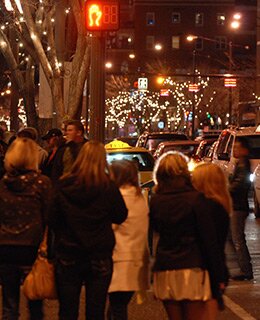
Moreover, as demand for more youth-oriented social and entertainment venues grows, the impacts from late-night activity have been more noticeable throughout the City.

An Initial Push for Change
In 2002, long-term residents and businesses in Old Strathcona, faced with frustration from lack of bylaw enforcement, organized and achieved success by placing a moratorium on new licensed beverage businesses in the Old Strathcona district. As well they sought enforcement of development (versus fire) occupancy codes, resulting in strained relations between businesses, city government and residents.
The controversy facilitated the formation of the Old Strathcona Hospitality Association, led by late-night hospitality business owners sharing similar concerns and a desire to preserve the unique character and vibrancy of Whyte Avenue.
While these actions appeared to deal with the late-night concerns of the time, it has been demonstrated, through the experience of other municipalities, that unless substantive change in how cities/businesses provide services and programs in communities that play a hospitality role in the fabric of the city, the challenges and issues fester and eventually result in loss of sustainability and disharmony.
The Road to Responsible Hospitality Edmonton
As part of the Old Strathcona Project (the Incident on Whyte Avenue the morning of July 2, 2001), City Council (in October 2002) approved the following motion: “Establish a Task Force to develop long-term viable options to retain the spirit, character, heritage and community wellness of the area. Membership would include residents, not for profit organizations, business operators, commercial property owners, City of Edmonton and Edmonton Police Service staff members.”
In February 2006, the Old Strathcona Task Force’s report was approved by the City’s Senior Management Team (SMT). As part of that approval the SMT directed that departments prepare action plan items with costing, identifying risks and conflicts.
In order to develop a framework for these action plan items, a diverse work team was struck consisting of representatives from business associations, community residents, Edmonton Police Service, Old Strathcona Hospitality Association, and the City’s Community Services Department.
The work team engaged the Responsible Hospitality Institute (RHI) to implement its RHI Process from May to July of 2006. The RHI Process is a proven structured process with respect to the hospitality industry staying strong and vital while being a contributing factor to the life of the overall community.
Through the efforts of the work team, supported by the RHI process, over 100 stakeholders from four distinct sectors (Hospitality, Safety; Development; and Community) were involved in the development of the framework to move forward.
In working through this process it was recognized that although the focus had been on public safety risks and impact on quality of life on Whyte Avenue, there are emerging areas of the city with similar challenges, either existing or anticipated in the future. Additionally it was felt that this framework would help to unite the many “silo” efforts underway with the city government and the grassroots community.
In September 2006, City Council approved the framework developed by the work team utilizing the Old Strathcona Task Force recommendations and the RHI process. Initial funding to implement the framework was approved in December 2006.
Implementation of this framework, now known as Responsible Hospitality Edmonton, began in January 2007.